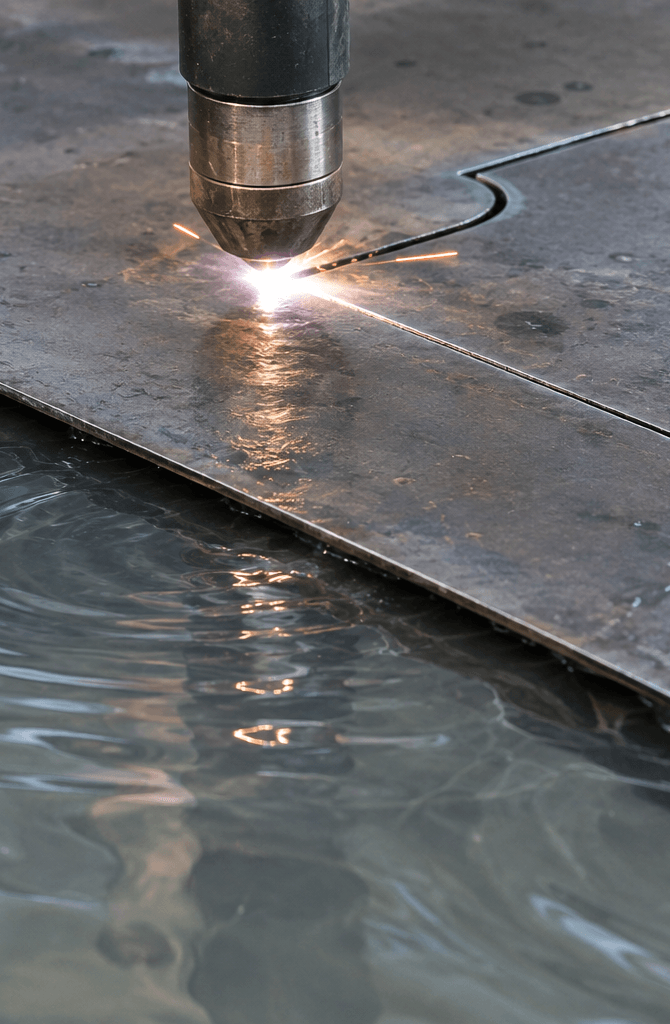
Imagine a machine with one very important job: cutting big pieces of metal into smaller shapes.
The machine works hard. It gets hot. Little pieces of metal fall away. Dirt and buildup collect around the cutting area. Water and exposed metal also create conditions where rust and corrosion become concerns.
That is where cutting table fluids enter the picture.
The simplest explanation is this: cutting table fluids are special industrial liquids used to help cutting equipment stay cleaner, cooler, and better protected while it works.
Think of them as part of the machine’s cleanup and protection team. Different fluids perform different jobs, but they all support the same basic goal: helping a cutting operation keep doing its job properly.
First, What Is a Cutting Table?
A cutting table is a large work surface used by industrial cutting equipment.
Put even more simply:
Metal goes onto the table. A machine cuts the metal. The cutting table supports everything while the work happens.
These tables are commonly associated with equipment such as:
- Plasma cutting systems
- Waterjet cutting systems
- Laser cutting systems
- Oxy-fuel cutting equipment
Some cutting systems use water tables or recirculating fluid systems as part of the operation.
That water does more than sit underneath the metal. Once water becomes part of an industrial cutting process, keeping the system clean and protecting metal components become important maintenance considerations.
What Are Cutting Table Fluids?
Cutting table fluids are industrial chemical products used to support the operation, protection, cleaning, and maintenance of cutting table systems.
Here is the kindergarten version.
Imagine leaving a metal toy outside in a bucket of dirty water.
After enough time, the toy becomes dirty. It starts looking rough. Rust develops.
Now imagine that bucket is part of a factory machine that works every day.
Keeping the water and equipment in good condition becomes much more important.
Cutting table fluids help manage specific problems inside these industrial systems. Depending on the product and application, that includes cooling, conditioning the water, protecting against corrosion, cleaning the table, or protecting surfaces from material buildup.
They are not all the same chemical, and they do not all perform the same job.
The phrase cutting table fluids describes a group of products used around the cutting table.
Why Can’t a Cutting Table Just Use Plain Water?
Think about what happens when you leave a bicycle outside in the rain.
Eventually, exposed metal starts changing.
Water and metal do not always make good long-term roommates.
A cutting table presents an even tougher environment. Metal is being cut. Heat enters the process. Small pieces of material and contaminants collect in the system. Equipment remains exposed to water and process conditions for extended periods.
Plain water does not address all of those operating conditions.
A properly selected cutting table fluid gives the operation chemistry designed for specific maintenance and protection requirements.
In simple terms:
Water gets wet. Cutting table fluid has a job.
Cutting Table Fluids Are Like Helpers With Different Jobs
It is easier to understand cutting table fluids by thinking about a group of helpers.
One helper keeps things cooler.
Another helps protect metal.
Another helps keep the table clean.
Another helps stop unwanted material from sticking to surfaces.
That is why there are several types of cutting table chemistry.
Coolants and Conditioners
Some cutting table fluids function as coolants or water conditioners.
Their job centers on managing the fluid environment inside the cutting system and supporting equipment protection.
Picture giving a hardworking machine a better environment in which to operate.
The machine still does the cutting. The fluid supports the conditions around that process.
Corrosion Protection
Metal and water create a familiar industrial problem: corrosion.
Rust is an easy example for a child to understand. Leave certain metals exposed to moisture long enough, and the surface begins changing.
In industrial equipment, corrosion is more than something that looks ugly.
It affects equipment condition, maintenance requirements, components, and overall process reliability.
Cutting table chemistry designed for corrosion protection helps address that problem.
Cutting Table Cleaners
Machines get dirty.
Cutting tables are no exception.
Residue, oils, grease, debris, and material from the cutting process accumulate around equipment.
Cutting table cleaners help maintenance teams remove unwanted contamination when cleaning and servicing the system.
Think of this part just like washing a very complicated industrial bathtub.
The difference is that the “bathtub” contains production equipment that a manufacturing operation depends on.
Protective and Anti-Spatter Coatings
Cutting metal creates material that operations do not necessarily want sticking everywhere.
Protective coatings help keep certain unwanted materials from bonding tightly to surfaces.
The children’s version is similar to putting something protective over a table before starting a messy art project.
The mess still happens.
Cleanup becomes easier because the surface has protection.
What Happens When Cutting Table Maintenance Is Ignored?
Imagine never cleaning your bedroom.
One sock on the floor is not a big problem.
Then another sock appears.
Then toys.
Then books.
Eventually, getting across the room becomes much harder.
Industrial equipment has its own version of that problem.
Contamination accumulates. Slag and dross build up. Water quality changes. Corrosion becomes a maintenance concern. Components require attention.
The individual problem starts small, but repeated buildup interferes with an efficient operation.
This is one reason manufacturers pay attention to both the cutting process and the condition of the table supporting it.
Cutting table fluids are one component of that maintenance strategy.
Are Cutting Table Fluids the Same as Cutting Oil?
No.
The names sound similar because both involve cutting, but they serve different applications.
Traditional metalworking cutting fluids work around machining processes where a tool physically removes material from a workpiece.
Cutting table fluids are associated with equipment such as plasma, waterjet, laser, and other cutting-table operations.
The easiest way to remember the difference is:
One helps with a cutting tool. The other helps with the cutting table system.
The exact fluid always needs to match the equipment and application.
Do Plasma Tables and Waterjet Tables Use the Same Fluid?
Not automatically.
Plasma and waterjet systems perform different cutting processes.
A plasma cutter uses an electrically conductive plasma arc to cut suitable materials. A waterjet uses a high-pressure stream to perform the cutting process, often with abrasive material depending on the application.
That means the equipment, materials, operating conditions, and maintenance requirements differ.
The correct fluid is selected according to the actual system.
This is why manufacturers should never assume that any product labeled “cutting table fluid” belongs in every cutting table.
Product documentation and equipment requirements determine the correct choice.
Why Cutting Table Fluid Selection Matters
Here is another simple example.
Imagine three bottles sitting on a shelf:
- Shampoo
- Dish soap
- Laundry detergent
All three clean things.
That does not mean they belong in the same machine.
Industrial chemistry works the same way.
Two products can both be described as cutting table fluids while having very different purposes.
The operation needs to consider factors such as:
- Type of cutting equipment
- Metals being processed
- Table design
- Water or fluid system
- Corrosion concerns
- Contamination
- Cleaning requirements
- Equipment manufacturer requirements
- Downstream production requirements
That is why the product label matters, the technical documentation matters, and the actual application matters.
Guessing is not a fluid-management strategy.
How Cutting Table Fluids Support a Manufacturing Operation
The biggest lesson is that cutting table fluid is not simply “stuff added to the water.”
It has an operational purpose.
Manufacturing teams depend on cutting equipment to keep producing parts. Maintenance teams depend on equipment that remains serviceable. Production managers want fewer unnecessary interruptions. Operators want equipment that behaves consistently.
Cutting table chemistry supports those objectives by addressing specific issues around cooling, cleanliness, corrosion, contamination, surface protection, and equipment maintenance.
The fluid does not replace proper maintenance.
It becomes part of proper maintenance.
Where PICO Chemical Fits Into Cutting Table Fluid Selection
Industrial chemical manufacturers such as PICO Chemical provide dedicated chemistry for cutting-table applications. PICO’s current cutting table product categories include plasma and waterjet fluids, table coatings and cleaners, and anti-spatter coatings.
That distinction is important because a cutting table operation does not always have one chemical requirement.
The operation has a process.
The process has equipment.
The equipment experiences heat, water exposure, contamination, residue, and maintenance demands.
The chemistry needs to match those conditions.
PICO also provides custom chemical formulation services for industrial applications where standard chemistry does not align with the specific process, equipment, materials, or performance requirements.
For plant teams, the practical approach is straightforward: identify what the cutting table needs the chemistry to accomplish, then select the product around that requirement.
Frequently Asked Questions About Cutting Table Fluids
What is cutting table fluid in simple terms?
Cutting table fluid is special industrial chemistry used around metal-cutting table systems. Depending on the product, it helps condition fluid, provide corrosion protection, support cooling, clean equipment, or protect surfaces from buildup. Different cutting table fluids have different jobs, so the product needs to match the equipment and application.
Why do cutting tables need special fluid?
Cutting tables operate around water, metal, heat, debris, and contamination. Those conditions create maintenance challenges that plain water does not address on its own. Specialized cutting table chemistry addresses specific problems such as corrosion, fluid conditioning, cleaning, or unwanted buildup.
Is cutting table fluid just coolant?
No. Coolant is one category of cutting table chemistry. The broader category also includes water conditioners, cleaners, corrosion-control products, protective coatings, and anti-spatter products. The correct product depends on what the operation needs to accomplish.
Can any cutting table fluid go into any cutting machine?
No. Cutting equipment has different designs, materials, processes, and chemical requirements. A product intended for one application should not automatically be used in another. Operators should follow equipment requirements, product technical documentation, SDS information, and guidance from the chemical manufacturer.
Does cutting table fluid replace cleaning the machine?
No. Cutting table chemistry supports maintenance rather than replacing it. Cutting equipment still requires proper inspection, cleaning, fluid management, and maintenance according to the equipment and chemical manufacturers’ requirements.
How should an operation choose a cutting table fluid?
Start with the equipment and the problem that needs to be addressed. Determine whether the concern involves corrosion, cooling, fluid condition, contamination, cleaning, slag buildup, or another process requirement. Then evaluate chemistry designed for that specific application rather than choosing a product based on its name alone.
The Simplest Way to Remember Cutting Table Fluids
A cutting table is a hardworking piece of industrial equipment.
Hardworking equipment needs care.
Cutting table fluids are part of that care.
Some keep the fluid system properly conditioned. Some protect metal. Some help with cooling. Some clean. Some keep unwanted material from sticking.
The chemistry changes according to the job, but the underlying purpose stays simple: support a cleaner, better-protected, more dependable cutting operation.
For manufacturers evaluating cutting table chemistry, the best starting point is not asking, “What fluid should we buy?”
Start with a better question:
What does our cutting table need the fluid to do?
Once that answer is clear, choosing the right chemistry becomes much easier.


