Category: Tech

  • Why Flatter Network Architectures Are Driving Adoption of 800G FR4 Optics

    Why Flatter Network Architectures Are Driving Adoption of 800G FR4 Optics

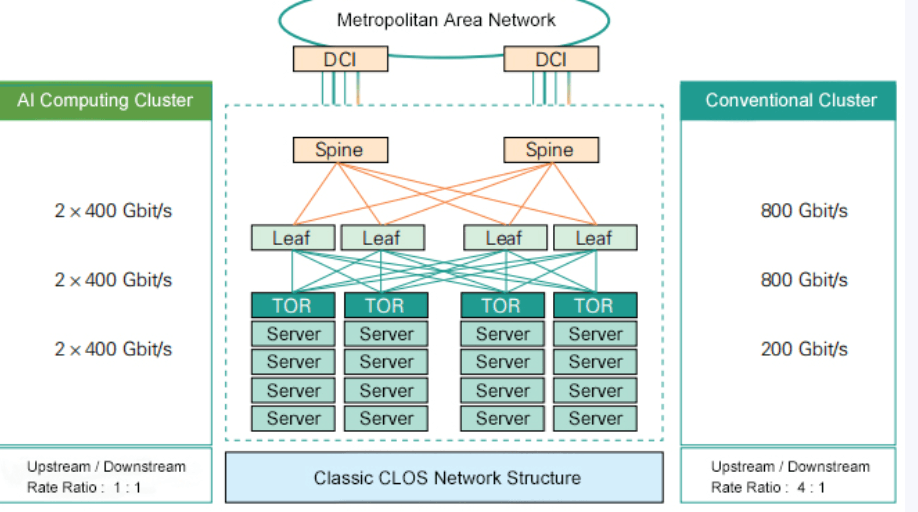
    Bigger Clusters Usually Mean More Complexity

    For many years, expanding a data center followed a familiar pattern.

    When traffic increased, operators added another aggregation layer. When server counts grew, additional switches were introduced. As infrastructure expanded, the network gradually accumulated more tiers, more uplinks, and more interconnection points.

    This approach worked reasonably well when applications generated predictable traffic and growth happened gradually.

    Modern AI infrastructure has changed those assumptions.

    Today’s training clusters can contain thousands of GPUs exchanging information continuously. Storage platforms move enormous datasets between compute resources. Distributed workloads span multiple buildings and data halls.

    As these environments scale, network complexity grows rapidly.

    The challenge is no longer simply providing bandwidth.

    The challenge is preventing the architecture itself from becoming a bottleneck.

    This is one reason why many organizations are actively pursuing flatter network designs.

    Why Network Layers Create Hidden Costs

    Every layer inside a network serves a purpose.

    Aggregation switches help consolidate traffic. Core layers provide centralized connectivity. Additional routing domains improve scalability.

    But each layer also introduces tradeoffs.

    Traffic must pass through more devices. Additional management points are created. More hardware consumes more power. Troubleshooting becomes more complicated because packets travel through a larger number of systems before reaching their destination.

    Individually, these effects may seem minor.

    At AI scale, however, they become increasingly significant.

    A network supporting thousands of accelerators benefits from simplicity. Fewer devices often mean fewer failure points, more predictable traffic behavior, and easier operational management.

    The industry’s growing interest in flatter architectures reflects this reality.

    Why Higher-Speed Links Make Simplification Possible

    Historically, networks expanded because lower-speed links could not handle growing demand.

    If a switch reached capacity, operators added more devices. If traffic increased, additional aggregation layers helped distribute the load.

    The arrival of 400G and 800G networking changes that equation.

    A single optical link can now carry traffic volumes that previously required multiple connections and additional switching resources.

    This makes it possible to rethink network topology.

    Instead of building larger networks through additional layers, operators can increasingly rely on higher-capacity links to connect resources directly.

    The NVIDIA/Mellanox MMS4X50-NM compatible 800G 2×FR4 OSFP transceiver is designed for exactly this type of environment.

    Its combination of high bandwidth and moderate-distance reach helps connect major infrastructure domains without requiring unnecessary intermediary devices.

    The Importance of the 2km Distance Window

    Many discussions around optical networking focus on maximum transmission distance.

    In practice, what matters more is whether the reach matches the deployment.

    The 2km capability of FR4 technology sits in a particularly useful position.

    It extends far beyond traditional intra-rack and intra-row connectivity while remaining simple enough to operate within standard data center environments.

    Most campus-style deployments, multi-building AI clusters, and distributed computing facilities fall comfortably within this range.

    Because of that, organizations can often connect separate infrastructure zones directly rather than introducing additional switching layers between them.

    The result is a cleaner and more efficient architecture.

    Sometimes reducing network complexity is more valuable than extending network reach.

    Why Duplex LC Connectivity Supports Simpler Designs

    Another factor contributing to flatter architectures is physical infrastructure simplicity.

    Large-scale MPO deployments certainly offer density advantages, but they can also increase cabling complexity as networks grow.

    The MMS4X50-NM compatible module uses duplex LC connectivity combined with wavelength multiplexing technology.

    This approach allows 800G traffic to travel over just a pair of single-mode fibers.

    For operators managing large campus environments, this creates several practical advantages.

    Fiber management becomes easier. Existing infrastructure can often be reused. Expansion projects require fewer physical modifications.

    Most importantly, high-capacity connectivity becomes accessible without introducing additional cabling complexity.

    Physical simplicity often supports architectural simplicity.

    Connecting Buildings Without Creating New Layers

    As AI deployments continue expanding, organizations frequently encounter a common challenge.

    Additional compute resources are deployed in neighboring buildings because existing facilities run out of power, cooling capacity, or floor space.

    The question then becomes how to connect these environments efficiently.

    One option is to build dedicated transport layers between facilities.

    Another option is to extend the primary network fabric directly.

    The second approach has become increasingly attractive as optical technology evolves.

    An 800G FR4 link can provide sufficient bandwidth to connect major infrastructure domains without introducing an entirely separate networking layer.

    This allows organizations to treat multiple facilities as part of a unified environment rather than a collection of isolated systems.

    Twin-Port Architecture Helps Future-Proof Growth

    One reason network planners appreciate FR4-based solutions is flexibility.

    Traffic patterns rarely remain static.

    An inter-building connection deployed today may support entirely different workloads two years from now. Capacity requirements may shift. Infrastructure priorities may change.

    The 2×FR4 twin-port architecture provides options.

    Operators can deploy the module in different configurations depending on current requirements while preserving flexibility for future adjustments.

    This adaptability reduces the risk of infrastructure becoming locked into a single design strategy.

    When building large-scale networks, flexibility is often as important as raw performance.

    Air-Cooled Infrastructure Isn’t Going Away Anytime Soon

    Much of the industry discussion surrounding AI focuses on liquid cooling.

    While liquid-cooled compute environments are expanding rapidly, the networking layer remains heavily dependent on air-cooled systems.

    Switch platforms such as Quantum-2 InfiniBand and Spectrum-4 Ethernet continue to rely on efficient airflow management to maintain stable operation.

    The finned-top design used by the MMS4X50-NM compatible module supports this requirement by improving thermal dissipation inside high-density switch environments.

    Reliable thermal performance becomes increasingly important as port speeds rise and aggregate bandwidth reaches unprecedented levels.

    Even the most advanced network architecture depends on stable physical operation.

    Building Networks That Feel Smaller Than They Are

    Perhaps the most interesting trend in modern infrastructure is that some of the largest networks are designed to appear simple.

    Operators are moving away from architectures that rely on numerous intermediate layers and toward designs that emphasize direct connectivity and operational clarity.

    High-speed optical technologies play a major role in enabling that shift.

    The MMS4X50-NM compatible 800G 2×FR4 transceiver helps organizations connect large infrastructure domains while avoiding some of the complexity traditionally associated with large-scale growth.

    In many ways, the future of networking may involve making massive environments feel operationally smaller.

    Conclusion

    The NVIDIA/Mellanox MMS4X50-NM compatible 800G 2×FR4 OSFP optical transceiver is more than a high-bandwidth connectivity solution. It supports a broader movement toward flatter, more streamlined network architectures. By combining 800G performance, duplex LC connectivity, 2km single-mode reach, and a flexible twin-port design, it enables organizations to connect distributed infrastructure directly while reducing dependency on additional network layers. As AI clusters and large-scale data centers continue expanding, technologies that simplify architecture while maintaining performance are likely to play an increasingly important role in future network design.
  • Double the RAM: Exclusive Offer on India Dedicated Server via OnliveServer

    Double the RAM: Exclusive Offer on India Dedicated Server via OnliveServer

    In the rapidly changing world of technology, performance has become a basic requirement for all kinds of websites and applications. They require to cope with heavy traffic, workload, and real-time requirements without slowing down. And here comes the need for a highly-performing Dedicated Server in India. Thanks to the special offer by OnliveServer, customers can now get twice more RAM and enjoy much better performance, stability, and scalability.

    This option is particularly useful for companies that run heavy-load applications, sites with lots of traffic, and perform data-intensive operations. The more memory your servers get, the faster and easier tasks will be processed. Let’s discuss in detail why it is important to have twice more RAM, for whom this offer works best, and what are the pros of such an upgrade.

    Why Extra RAM on an India Dedicated Server Matters Now

    Extra RAM on a India Dedicated Server matters more than ever because modern websites and applications are becoming increasingly resource-intensive and demand faster, more stable performance. With higher traffic volumes, real-time processing, and complex backend operations like databases, caching, and APIs, additional memory ensures the server can handle multiple tasks simultaneously without slowing down or crashing. It reduces reliance on disk swapping, improves response times, and keeps performance consistent even during peak usage periods. For businesses targeting Indian and global audiences, extra RAM also enhances scalability, user experience, and overall reliability—making it a crucial upgrade for maintaining smooth and uninterrupted hosting performance.

    What Doubling RAM Really Unlocks

    Increasing the server’s capacity for data processing by doubling its RAM greatly boosts the overall capacity of the server since it is capable of processing multiple pieces of data simultaneously without any loss in performance. In addition, the server can be able to handle intensive tasks such as online business transactions and dynamic website content. The additional capacity in the form of extra RAM means that the server does not have to rely on swapping, hence improving the response time when accessing information from memory rather than from the hard drive.

    Who Benefits Most from an India Dedicated Hosting Upgrade with Double RAM

    Not every business has the same hosting requirements, but several industries benefit significantly from increased memory capacity.

    • E-commerce Businesses: Online stores benefit from higher RAM as it helps manage heavy traffic, large product databases, and smooth checkout processes during peak sales without downtime.
    • SaaS & Web Application Providers: Software-as-a-Service platforms require strong memory resources to support multiple users, real-time processing, and seamless application performance.
    • Digital Marketing & SEO Agencies: Agencies running multiple campaigns, tools, and client websites simultaneously gain faster performance and better multitasking efficiency.
    • Gaming Server Operators: Multiplayer game servers rely on high RAM to reduce lag, improve responsiveness, and support more concurrent players smoothly.
    • Enterprise & Data-Driven Businesses: Large organizations handling analytics, databases, and business applications benefit from improved processing speed and stable server performance under heavy workloads.

    OnliveServer’s India Dedicated Server Advantage

    When it comes to performance-focused hosting, it provides optimized infrastructure designed for speed, security, and scalability. The availability of double RAM configurations enhances the overall value of an Exclusive Server Hosting.

    • High-Performance Hardware Infrastructure: Powerful CPUs and enterprise-grade components ensure smooth handling of heavy workloads and high-traffic websites.
    • Scalable Server Configurations: Easily upgrade resources like RAM, storage, and bandwidth to match your growing business needs.
    • Fast SSD/NVMe Storage Options: Accelerates data access, improves loading speed, and enhances overall server responsiveness.
    • Strong Security & Protection: Includes firewalls, DDoS protection, and continuous monitoring to keep your data and applications safe.
    • Reliable Uptime with 24/7 Support: Ensures maximum server availability backed by round-the-clock technical assistance for uninterrupted operations.

    Choosing the Right Configuration for Your Dedicated Hosting Server in India

    It is important to select the correct configuration of your Dedicated Hosting Server in India for ensuring the best possible performance and cost-effectiveness for your business. Begin by considering the workload requirements, such as the CPU power needed for processing, adequate memory capacity for multitasking, and fast storage options like SSD or NVMe drives. You should also choose the bandwidth according to the amount of traffic your server needs to handle without any hiccups. Another aspect to consider would be opting for either a managed or unmanaged hosting service according to your technical skills. Moreover, it is important to think about the scalability of your server, which can support growth in the future.

    Security and Compliance Essentials for India Secure Hosting Server

    Compliance and security are important parts of any India Secure High-Performance Server for companies that deal with sensitive information and critical applications. The server must have security features such as a firewall, protection from distributed denial-of-service attacks, regular security patches, and constant monitoring in order to ensure safety and prevent any threats. In addition, encryption will increase confidentiality and data integrity. Complying with security regulations and standards not only ensures that the company complies with the law but also builds customer trust and reputation. Moreover, access controls, backup procedures, and intruder detection can provide even more security to the server system.

    Cost Optimization: Get More Value from Double RAM

    The cost optimization through the use of dual RAM in a dedicated server optimizes the performance, thereby cutting down on the requirements for further resource utilization or another server. The approach enables efficient handling of heavier loads without any downtime, thus speeding up the caching process.

    See also: Newspagebuilder SEO Techniques to Increase Organic

    Conclusion

    As technology becomes more and more competitive, performance plays a key role in ensuring that businesses can thrive. By increasing your memory to double RAM on a Dedicated Hosting Server in India, you will be able to boost speed and performance significantly, allowing you to get the best out of the modern workload requirements.

    By utilizing the quality infrastructure provided by OnliveServer, companies have access to efficient servers that are capable of meeting any demand. The increase in RAM capacity combined with powerful hardware allows you to achieve optimal results.

    Selecting the right type of server with increased memory capacity helps ensure that you will be future-ready and ahead of your competitors.

  • The Future of IT Education and Continuing Professional Development in the USA

    The Future of IT Education and Continuing Professional Development in the USA

    The American educational landscape is undergoing a seismic shift. As we navigate through 2026, the traditional four-year degree path is no longer the sole highway to success. With the Bureau of Labor Statistics (BLS) projecting a 13% growth in computer and information technology occupations through 2030, the pressure on students to perform has never been higher. Yet, a parallel trend is emerging: the rise of the “non-traditional student.” Today, nearly 40% of US undergraduates are over the age of 25, many of whom are balancing full-time careers with rigorous academic schedules.

    Key Takeaways

    • Skill Gap Reality: Over 60% of US IT departments report a moderate to severe skills gap, particularly in AI and Cybersecurity.
    • The Rise of Flexibility: Enrollment in part-time and “continuing education” programs has seen a 12% increase as professionals seek to upskill without leaving the workforce.
    • The Academic Burnout Factor: 73% of US college students report experiencing burnout, often cited as the primary reason for seeking external academic support.
    • Economic ROI: IT professionals with a specialized bachelor’s degree earn a median salary of over $100,000, nearly double the national average for all occupations.

    The Tech Evolution: Bridging the Gap in Information Technology

    In the United States, the Silicon Valley standard has moved beyond simple “coding.” Today’s IT students are expected to master cloud architecture, ethical AI, and data analytics—often before they’ve even finished their sophomore year. This “curriculum acceleration” has created a massive demand for supplemental resources.

    Academic institutions are struggling to keep pace with industry changes. While a university might take two years to approve a new course, the tech world evolves in months. For students, this means the difference between a high-paying internship and a rejection letter depends on their ability to master complex concepts outside of the lecture hall.

    This is where specialized guidance becomes essential. For those feeling overwhelmed by the technical depth of their coursework, seeking expert Information Technology assignment help has become a standard strategy for US students to maintain their GPA while focusing on actual skill acquisition.

    Continuing Education: Why the “Part-Time” Model is Winning

    While the US has its own ecosystem of certifications, the global “Part-Time Diploma” model is gaining significant traction in American discourse. Professionals are realizing that they don’t need to quit their jobs to earn advanced credentials.

    In the US, “Continuing Education” programs are often the equivalent of the international part-time diploma model. These programs allow working adults to gain specialized knowledge in shorter bursts. Data from the National Student Clearinghouse shows that adult learners prioritize three things:

    1. Speed to Completion: They want high-value skills in 6–12 months.
    2. Affordability: Avoiding the $40,000/year price tag of traditional private colleges.
    3. Flexibility: 100% online or hybrid models that fit around a 9-to-5 job.

    Case Study: Balancing a Career in Fintech with a CS Degree

    Profile: Alex M., 28, Junior Systems Analyst in Charlotte, NC.

    Challenge: Alex was working 45 hours a week while pursuing a Master’s in Information Technology. By the second semester, his grades in “Advanced Database Management” dropped to a C due to work-related travel and exhaustion.

    The Intervention: Alex realized he couldn’t do it all alone. He began using academic support services to handle the preliminary research and structuring of his complex technical essays. This allowed him to focus 100% of his limited energy on the actual coding and lab work required for his degree.

    Result: Alex completed his degree with a 3.8 GPA. Six months later, he was promoted to Senior Architect, receiving a 22% salary increase. Alex’s story is a blueprint for the modern American student: it’s not about working harder, but working smarter with the tools available.

    Data-Driven Insights: The Economic Impact of Degree Specialization

    According to 2024-2025 labor data, the “wage premium” for degree holders remains robust despite the rise of “skills-based hiring.”

    Education LevelMedian Weekly Earnings (USD)Unemployment Rate
    Bachelor’s Degree$1,4932.2%
    Associate’s Degree$1,0582.7%
    Some College, No Degree$9923.5%
    High School Diploma$8994.0%

    For IT students, these numbers are even higher. A specialized certification or degree in cybersecurity or AI can lead to starting salaries exceeding $120,000 in major US metros like Austin, Seattle, or New York City.

    See also: Newspagebuilder Features You Must Know Before Using

    Frequently Asked Questions (FAQs)

    1. Is it legal to use assignment help services in the US?

    Yes. Using academic support services is legal and is often viewed by students as a form of “private tutoring” or “professional editing.” It is a tool for learning and time management, helping students understand complex topics they might have missed in a crowded lecture hall.

    2. How do I balance a full-time job with an IT degree?

    The most successful students use a “Micro-Learning” approach—studying in 20-minute bursts. Additionally, leveraging external resources for research-heavy tasks can save up to 15 hours of work per week.

    3. Will AI replace the need for an IT degree?

    No. While AI will automate basic coding, the need for human oversight, ethical decision-making, and complex system design is growing. Employers are looking for “AI-augmented” professionals, not just people who can prompt a chatbot.

    4. Are part-time diplomas worth it for US careers?

    Absolutely. In the US, employers increasingly value “stackable credentials.” A part-time diploma or certification proves that you are a “lifelong learner”—a trait that is highly prized in the fast-moving tech sector.

    Conclusion

    The future of education in the USA is hybrid, flexible, and tech-driven. Whether you are a traditional student tackling a rigorous IT curriculum or a working professional pursuing continuing education, the key to success is leveraging the right resources at the right time. Don’t let a single complex assignment derail a six-figure career.

    Author Bio

    Dr. Jonathan Sterling is a veteran academic consultant with a Ph.D. from Georgia Tech. He has spent fifteen years analyzing US labor trends and digital transformation in education. Dr. Sterling frequently collaborates with MyAssignmentHelp to provide data-driven strategies for students navigating the complexities of modern Information Technology and professional upskilling.